Tag Archives: agents

Do I Really Need an Agent? Kudos & MoGo7000 Celebrations!

Contract PixabayDo I Really Need an Agent?

When I teach at writers conferences, I often get the question, “Do I really need an agent?” Well, you’ll be happy to know I can confidently and unequivocally answer that question in three simple words: Yes, no, and maybe.

When I wrote my first book, I knew I didn’t want an agent. I mean, why would I want to give a whopping 15 percent of my earnings to a total stranger when I could do it myself and keep all that money?

Then the rejections came–years of them–and I finally began to think that perhaps 85 percent of something would be better than 100 percent of nothing! So I started my search for an agent, and the only nibbles I got were from agents with shady reputations. And we won’t talk about that today.

Fast forward eight years to 2001 and I finally have a book contract for Bitsy and the Mystery at Tybee Island–without the help of an agent.

So, did I do the right thing by publishing without an agent? I’ll never know. But I do know this: When it came time to write my first women’s non-fiction book, I didn’t even consider trying to find a publisher as an unagented writer. And I’m so glad I didn’t.

You’ve probably heard it said that finding a good agent is harder than finding a publisher. That may be true. But it’s also true that once you find a good agent, it’s a lot easier to land a publishing contract. Many publishers now use agents as their clearinghouse to wade through the junk to find the publishable writers. Those publishers know that a good agent will only take on good writers, so the fact that a reputable agent is presenting you lends credibility to your work.

A good agent will know who’s looking for what, what genre has the best chance at certain houses, and whether a publisher just signed a deal for a book similar to yours. Good agents have connections, know the latest scoop, and many of them have worked as editors themselves.

So let’s look at the three simple words and their meaning in response to the agent question.

Yes…

  • You most likely need an agent if you want to be published by a large publisher. Every now and then we’ll hear the story of an unsolicited manuscript being picked up by a large house, but most major publishers will not even consider an unagented manuscript sent in by the author.
  • You need an agent if you don’t have the time, patience, or knowledge to reach multiple editors simultaneously.
  • You’re most likely to need an agent if you’re not going to writer’s conferences where you’re meeting with editors face-to-face.

No…Yes No Maybe Pixabay

  • You don’t need an agent if you’re interested in any form of self-publishing, such as POD, vanity press, or old-fashioned self-publishing.
  • You don’t need an agent if the Writer’s Market Guide or the Christian Writer’s Market Guide state the publisher does not work with agents.
  • If an editor at a writer’s conference tells you that he or she is interested in seeing your manuscript and then personally tells you how to submit it, you do not have to have an agent.
  • You don’t need an agent for poetry or magazine articles.

Maybe…

  • You may not need an agent for children’s material, especially shorter pieces like picture books and board books. Just be sure to do your research and follow the writer’s guidelines.
  • You may not need an agent for a small press, regional press, or university press. Again, check the guidelines in the Writer’s Market Guide.
  • Even if an editor offers you a contract without agent representation, you may want to consider seeking an agent at that point. There are many agents who would love to represent you in the negotiation phase when you already have a contract–and their involvement could mean a higher advance or higher royalty schedule for you.

As you can see, there’s no one-word answer to that question. So, go back and do everything we talked about in Giving Birth to Your Book, Part 1 and Giving Birth to Your Book, Part 2, then study today’s entry. I have a feeling you’ll know the answer to your question.

Thanks for Tweeting!

Do You Really Need An Agent? Yes, No, or Maybe! @VondaSkelton via Christian Writer’s Den #amwriting #pubtips (Click to Tweet)

~~~~~~~~~~~~~~~~~~~~~~~~~

fireworks PixabayLet’s celebrate with these Christian Writer’s Den friends!

1.  Rebecca Lindsey (CA): My good news is that I have been published twice on an inspirational website called TheSeeds4Life. I also have consistently written on my new blog and picked up followers. I continue to work on children’s magazine articles and my YA girls novel. I’m working on building my platform steadily. Thanks, Vonda for your encouragement and God bless!

2. Jeanne Doyon (CT): Two articles have been reprinted. One in Reach Out Columbia Magazine called, “Going Tandem.” The second in Nebraska Family Times is called, “Gleaning by the Ocean.” I am thankful that words can be repurposed for His purpose. (Vonda here: Me, too!)

3.  Maureen Hager (NC): My story “Quiet Refuge” is published in the new book, Chicken Soup for the Soul: Inspiration for Nurses. I am so honored to pay tribute to an amazing nurse whose compassionate heart brought much hope and healing while recovering from a trauma.

Didn’t find your name in the Kudos Celebration this month? Be sure to check back next week when I have a new list of writing opportunities, conferences, and contests just for you!

~~~~~~~~~~~~~~~~~~~~~~~~~mogo7000 logo

Will one of these MoGo7000 Qualifiers win $100?

Congratulations to these writers who earned another chance to win $100 at the end of the year!

#8: Tim Suddeth – 23,419 words
#9: Susan Baganz – 18,270 words 

This is a good year for being in the running for $100 in cold hard cash. Don’t be left out! Check out the MoGo7000 Challenge guidelines to see how YOU might be a winner. It’s all free!

Thanks for Tweeting!

#Writers: MoGo7000 could win you $100-it’s #free! #amwriting @VondaSkelton via Christian Writer’s Den  (Click to Tweet)

~~~~~~~~~~~~~~~~~~~~~~~~~

That does it for another 2nd Tuesday. Hope to see you back next week for a new bunch of writing opportunities, conferences, and contests!

Write on!

Vonda

Read entire post »


Chip MacGregor: Ask the Agent, Kudos & MoGo7000 Call-Outs & Who Won Cindy Sproles’ Book?

Chip MacGregor headshot2If you’re not following agent Chip MacGregor’s blog, I have three words for you: You need to. Chip is a top-notch literary agent and president of MacGregor Literary. He works with both the Christian and general market and loves sharing his snarky-laced words of wisdom with writers. I’m telling you now, you don’t want to miss his annual Bad Poetry Contest in May–what a fun way to celebrate his birthday!

Today, I’m thrilled to share a recent question submitted to Chip’s Ask the Agent blog series. Great advice for those who are serious about writing. But watch out, you must have your humor hat on or you may not get it.

Thanks, Chip!

Excerpt from Chip MacGregor’s blog series, Ask the Agent: “What 10 editorial mistakes do most novice authors make?”

I suppose if you asked this of ten agents, you’d probably get a hundred total answers, but here are my pet peeves with newbie authors:

  • Too many exclamation points!!!
  • A proposal that has not been proof-red
  • Overpromising, as in “This proposal will sell a billion copies!”
  • FEELING A NEED TO PUT LOTS OF WORDS IN ALL CAPS.
  • Random numbering in an outline.
  • I did this, I did that, I did this other thing, I, I, I.
  • Random commas, that make no, sense.
  • A failure to understand how to properly use “quotation” marks. (Also parentheses. And their attached punctuation).
  • Failing to understand the difference between its and it’s (or there and their and they’re).
  • The manuscript is passive due to the author.

Hint for the humor impaired: There are intentional errors in that list. If you see one, don’t send me aHow Can I Find A Literary Agent cover scolding note or you’ll be banned from the blog. It’s a joke. I know you don’t get it. Just trust me – others find it funny. 

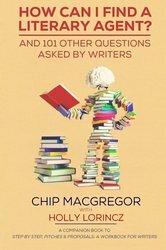
Friends, I hope you learned something about agents and what they’re NOT looking for. And if you’re a writer interested in finding out more agent answers to your questions, check out Chip’s new book, How Can I Find A Literary Agent? And 101 Other Questions Asked by Writers .

~~~~~~~~~~~~~~~~~~~~~~~~~

Call-Out for Kudos…I Want to Brag on You!

It’s really simple, but I do ask that you contact me with the info in this format and order ONLY:

**Your name
**Your state in two-letter abbreviation
**Link to your website or blog
**Your good news
**Link to your good news, if online (online bookstore, online article, etc)

I can’t wait for us to celebrate with you!

mogo7000 logo~~~~~~~~~~~~~~~~~~~~~~~~~

Call for MoGo7000 Totals

If you wrote at least 7000 new words on a book project in March, you can receive an entry in the drawing for the 2015 MoGo7000 $100 cash prize! It’s open to everyone who qualifies.

To report your March results, please leave a comment below with your total new words written in March. (Please do not send your totals by email or through the Contact page. Totals must be left as a comment here by next Monday). 

If you missed out on last year’s money-winning writing challenge, don’t worry, the 2015 challenge is underway! Here are the MoGo7000 Challenge rules. All you have to do is write at least 7000 NEW words on a book project in any month and you’ll receive an entry into the end-of-the-year drawing for $100.

Each month that you qualify with 7000 new words, your name goes in the “hat” for the drawing. Reach the goal one month and you’ll have one entry. Meet it 10 months and you’ll have 10 entries!

So what are you waiting for? Get started now and you could have $100 this time next year. And it doesn’t cost you a cent. :-)

~~~~~~~~~~~~~~~~~~~~~~~~~

And Who Won Cindy Sproles’ Book, Mercy’s Rain?Cindy Sproles Mercys Rain cover

The winner is…drumroll, please…

Cindy Patterson!

Congratulations, Cindy (Patterson)! I’m so happy for you and I know you’re going to love this book. Simply contact me with your snail mail address and Cindy (Sproles) will get the book right out to you. (Hmmm…could this be a Cindy conspiracy?) :-)

Well, for those of you who are not named Cindy, here’s a direct Amazon link to Mercy’s Rain. I know–and you know–you want your own copy!

~~~~~~~~~~~~~~~~~~~~~~~~~~

Thanks for Tweeting!

Ask Agent Chip MacGregor, Call-Outs & Cindy Sproles’ Mercy’s Rain winner. #amwriting @MacGregorLit @VondaSkelton (Click to Tweet)

Well, that does it for another 1st Tuesday. I can’t wait to see you back next week to meet another author and to celebrate our successes together!

Happy writing!

Vonda

Read entire post »


Giving Birth to Your Book, Part 2: All Cleaned Up, Now Where Do We Go?

Photo Courtesy of FreeDigitalPhotos.net

If you’ve gone through the steps mentioned in the previous blog entry, Giving Birth to Your Book, Part 1, you’ve already written, proofread, received feedback from readers and other writers, and rewritten several times, and you’re happy with the finished product. Now what do you do with your baby?

1.  Be sure it’s ready. I know, I know. I’ve already said this, but it can’t be said often enough. Don’t even think about submitting your work until it’s as good as you can possibly make it. Be sure you’ve followed the steps listed in Part I before you proceed to step #2 below. Remember, your project will rarely get more than one shot at a publishing house.

2.  Study the Writer’s Market and The Christian Writer’s Market Guide. In the world of writing and submitting for publication, these books or online products can be your best friend. Each book lists contact information, submission guidelines, editorial needs, and payment information for the publishers of books, magazines, greeting cards, plays, and other specialized publishers. Jerry Jenkins’ Christian Writer’s Market Guide specializes in Christian publishing information. Both books offer additional resources and tutorial guides, such as information on agents, conferences, websites, and writing instruction. But the primary focus of each resource is to help you find the best fit for your book. This will take time, but you must research these books! Don’t make the same mistake I did. I didn’t think I had time to study the market–and consequently I dashed to publication in a mere 7 years! Study the market and you could save yourself lots of time and money.

3.  Research internet writer’s guidelines. In this day of technology, more and more publishers post their guidelines on their website.

4.  Learn the lingo. Both market guides have a glossary of terms listed in the back of the books. You’ll also want to check out Jane Friedman’s Writing & Publishing Terminology 101.

5.  Find a good fit in the market guide. If a publisher of children’s books says they don’t want picture book submissions, don’t waste your time and theirs by thinking your amazing “baby” will be the exception to the rule. It won’t. (Yes, when I initially started sending out my first book, I thought that once the editor saw my beautiful baby, he or she would do anything to publish my book–including throwing out the entire editorial calendar and revamping their marketing strategy to make their guidelines fit my baby–even if the company had never published juvenile mysteries!)

6.  Follow the instructions in the market guides. This is a biggie. If it says not to send out simultaneous submissions, don’t send out simultaneous submissions. If it says to send one chapter, don’t send two. If it says to send the submission by snail mail, don’t email it. (Yes, there still are a few who request snail mail submissions.)

7.  Invest time writing a great query or cover letter, whichever the editor prefers. If you don’t know what a query letter is, see #4. And whatever you do, don’t say, “It starts off a little slow, but if you’ll just stick with it to page 21, it’ll be really exciting.” If that’s the case, perhaps your book starts on page 21. For more information about openings, read my earlier blog entry, Hook ‘Em!

8.  Be professional in your submission. I’ve personally heard editors tell stories of the ridiculous things some writers have done to get the editor’s attention. Believe me, this is not the kind of attention you want! Instead of elevating their chances of publication, the writers were eliminated from consideration by the following unprofessional actions:

  • Writing on the outside of the envelope: “Your next best seller is inside this envelope!”
  • Sending the submission on hot pink or lime green paper or anything other than plain white computer paper. (One editor repeatedly received one writer’s submissions on the backs of recycled paper. And I’m not talking about environmentally-green paper. I’m talking about the backs of previously-used, printed-on-the-other-side paper!)
  • Putting it in the wrong format. If you’re unsure of proper formatting, check out this earlier blog post, Formatting Basics. There are hundreds of websites that cover it as well.
  • Enclosing tickets to athletic events. (One editor admitted that he opened an envelope, found tickets, removed them, and returned the submission to the writer–unread. After all, he reasoned, the writer enclosed the tickets as a gift, and a gift is something given for free.)
  • Saying, “God told me you are to publish this book.” I can promise you, the editor’s response will be, “Well, when God tells me to publish it, I will.” (Now, before you get bent out of shape, yes–God often leads us to write words, but He is responsible for what He does with it, not us. When we insinuate that a publisher will be out of God’s will if he or she doesn’t publish our work, we immediately cut off communication.)

9.  Before submitting, call the publishing house for confirmation. Editors move and change jobs quite frequently. Before you send or mail your submission, call the switchboard (NOT the editor) and ask if Jane Doe is still the editor to send it to. If it isn’t, be sure to ask for the correct spelling and clarify the gender title.

So there you have it–the second half of how to get your book ready and in the hands of editors. I wish I could promise you that by following these suggestions you’ll be sure to see your work in print, but I can’t. But I can tell you that if you follow these steps, you’ll certainly be miles ahead of where I was when I started sending out my first book. That’s why The Christian Writer’s Den is here. I don’t want you to make the same mistakes I did. :-)

(Photo courtesy of FreeDigitalPhotos.net)

Read entire post »


The Elevator Pitch by Mark Glenchur

Photo courtesy of FreeDigitalPhotos.net and Twobee

With the conference season approaching, I thought it’d be a good time to let you read a humorous tutorial of how to deliver an elevator pitch. Thanks to Mark Glenchur for sharing his wisdom and insight.

The Elevator Pitch By Mark Glenchur

The elevator doors clanged shut.
I did not say a word
To the other fellow in the car
But suddenly I heard:

“Are you that famous editor?
Say, I’m a writer, too!
You see, I wrote this manuscript—”
I thought, How nice for you.

Alas, he did not hear my thought
And babbled like a brook:
“In fact, I have it with me now.
You want to take a look?”

Of course I did. Why else was I
Alive, except for that?
I checked the panel: second floor,
Three dozen from my flat.

Then, from his knapsack he withdrew
A folder one inch thick.
At least it wasn’t two. And yet
I started feeling sick.

He proudly plunked it in my hands.
My feverish pulse raced.
Four hundred-twenty pages. Times
New Roman, single-spaced.

I had a minor heart attack.
No matter, chapter one:
“It was a dark and stormy night.”
My kingdom for a gun…

A plastic smile upon my face,
I tried to read some more.
I sneaked a glance; the panel said
We’d reached the thirteenth floor.

Thus, five-and-twenty floors remained.
I did not think I’d last.
Page two: already, he had killed
Off half his starting cast.

I fought the urge to rip the sheet
In twain before his eyes.
I kept on reading, but resolved:
The next such “author” dies.

I have to say, I’ve never seen
A rough draft so…unique.
I almost thought, at first, the man
Had written it in Greek.

But, fortunately, I know Greek;
I learned it as a lad.
Yet this man’s Greek, if Greek it were,
Was bound to drive me mad.

His grammar seemed a Frankenstein
Of Martian, French, and Dutch.
(Yes, I know Martian, though I do
Not really speak it much.)

His use of punctuation looked
Like dominoes, or Braille,
Or Morse code, or a gambler’s dice,
Or some Dalmatian’s tail.

And, in the meantime, floor by floor,
The elevator rose,
But, when I thought to tell him off
And speak my mind, it froze.

How aggravating, being trapped
With this demented loon!
I prayed the elevator would
Resume its climb, and would do it soon.

“So, do you like it?” he inquired.
“Please, tell me what you think.”
To be quite honest, what I thought
Has driven men to drink.

I did not tell him all I thought,
But part of it, instead.
“I’ve never read its equal yet.
It’s something else,” I said.

I handed back his manuscript.
He clutched it, fighting tears.
“Oh, thank you, sir. That means so much.
It took me twenty years.”

“Don’t mention it,” I said; “No, please.
Just keep on at your work.”
And then, the elevator shook
And started with a jerk.

Floor thirty-eight — Ah, free at last;
Such joy I never knew.
The fellow joined me in the hall.
“Say, this is my floor, too!”

What happened next, I dare not say,
Since there are ladies here—
Though, when I was, at last, arraigned,
I got off with a year.

You authors and you editors,
Lest you should, unawares,
Fall into my unhappy fate,
Remember: take the stairs.

The moral of this story is, be careful how you treat those editors and agents. Otherwise, the next poem could be about YOU! :-)

Thanks, Mark, for sharing your brilliance with us!

Mark Glenchur is a professional writing major at Taylor University.  He writes book reviews for Church Libraries, Christian Book Previews, and The Aboite Independent.  His poems, which have appeared on national web sites and blogs, are often tongue-in-cheek parodies of life, literature, and love.

(Elevator photo courtesy of FreeDigitalPhotos and Twobee)

Read entire post »