
Photo courtesy of Stuart Miles
When I first decided to write a book, I didn’t have a lot of time to invest, so I looked for the quick and easy route to writing success. Of course, that meant I would write for kids. Right?
After all, kids don’t know the rules of writing. They don’t care about character development. They don’t need a lot of words. And they certainly don’t expect big words, lots of description, or a complex plot. I was on a fast track to success!
Seven years and 50-something rejections later I still didn’t have a published book.
The truth is, writing for children is NOT easier than writing for adults. Here are seven things you need to know if you want to write kids’ books that will get published…and get read.
1. Good writing is good writing, regardless of the target age group. A poorly-written manuscript will never get past the first reader. If you want to see your book in print, you need to learn the rules of writing.
2. Well-developed characters are necessary to obtain and maintain the short attention span of kids. Children are discriminating readers who expect interesting, compelling characters . . . and you have to present them quickly. A page or two is a lot of material for kids to read, so you’ll need interesting characters they can care about and form a relationship with, from the beginning.
3. It’s harder to write with a few words than it is to write with a lot. You’ve most likely heard the saying, “Write tight.” That’s never truer than with writing for kids. Picture books are usually only 500-1000 words. Have you ever tried to tell a well-developed story with good characters in 500 words? Now that takes skill! And even though word counts go up as the readers age, kids’ novels are generally less than half the length of those written for adults.
4. Children can spot a fake voice as soon as you open your characters’ mouths. The vernacular of today’s children changes quickly. Words that were cool last year are now so . . . well . . . last year! Let’s face it, about the time we adults adopt a term, it’s old stuff. So I have a group of kids who help me translate my language into theirs before I send it off to the publisher. I recommend you grab a group, too.
5. Just like adults, young readers want a sense of place, setting, and mood. That doesn’t mean you have the time and space to write pages of eloquent description, but choose your words wisely and your readers will enthusiastically join you on your fictional journey.
6. Don’t talk down to your readers. I read a lot of children’s material, and I see a repeated pattern in many first-time writers—talking down to the kids. As I said earlier, kids are smart and discerning readers. They don’t need us to explain what just happened in a scene. Give them enough information through the action, the nuance of the voice, and the physical expression, and they’ll get it. In other words, don’t say what you’re going to say and don’t say what you just said.
7. Include a simple plot for picture books and well-developed plots and subplots for chapter books and novels. This is where show-don’t-tell comes into play. You’ll never gain committed followers if your book is simply a list of “This happened, then this happened, then this happened.” Even young kids want to know the reason, the motivation, the reward. They want to cheer for the good guy and watch the bad guy get his due. And yes, they want things to end up fair at the end of the book. Include more than the surface story—especially for older kids—and they’ll love you for it.
So there you have it, seven truths you need to know in order to write publishable children’s material. Anything less, and you won’t get the attention of editors…or kids.
And if you’d like help learning how to write for kids, don’t miss my BUY One, GET One Sale for my Downloadable Writing Workshops! Buy one downloadable workshop and get another one absolutely free!
PLEASE NOTE: To get this special pricing, visit my Store and select the two classes you’d like, BUT ONLY PAY FOR ONE–either one. Then contact me with the 2nd class you’d like and I’ll send it out to you!
Please don’t order both classes online, or PayPal will charge you for both!
This special pricing applies to Write a Novel Children Will Love, Teaching Children Biblical Truth Through Secular Fiction, How to Have Magazine Editors Calling YOU! and Opportunities for Christian Writers. Even if you order the Writing for Children Double Package, only one free class will be given.
But you’ll have to hurry—the sale ends June 18, 2016. So head on over to the store, decide which classes you want, order and pay for one of them, and then contact me with your choice of the free class. It’s easy-peasy!
~~~~~~~~~~~~~~~~~~~~~~~~~
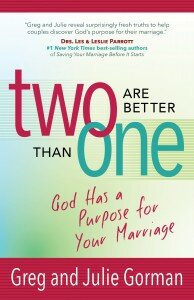 And who won Greg & Julie Gorman’s new book, Two Are Better Than One?
Random.org has selected the winner:
Julie Garmon!
Congratulations, Julie! Simply contact me with your snail mail address and Greg and Julie will get your book right out to you!
And for those who didn’t win, here’s a direct Amazon link to Two Are Better Than One: God Has a Purpose for Your Marriage. Enjoy!
~~~~~~~~~~~~~~~~~~~~~~~~~
It’s Time to Share Kudos of YOUR Successes!
Hey there, writing friends. We want to know what you’ve been up to. Have you had something exciting happen recently in your writing or speaking life? Maybe you’ve had an article published, signed a book contract, released a new book, got an agent, or started a new blog. If so, we want to hear from you!
It’s really simple, but I do ask that you contact me with the info in this format and order ONLY:
**Your name
**Your state in two-letter abbreviation
**Link to your website or blog
**Your good news
**Link to your good news, if online (online bookstore, online article, etc)
PLEASE let me hear from you. We want to celebrate your successes!
~~~~~~~~~~~~~~~~~~~~~~~~~
Who MoGo’d in May?
If you wrote at least 7000 new words on a book project in May, you can receive an entry in the drawing for the 2016 MoGo7000 $100 cash prize! It’s open to everyone who qualifies.
To report your May results, please leave a comment below with your total new words written on a book project in May. (Please do not send your totals by email or through the Contact page. Totals must be left as a comment here by next Sunday).
If you missed out on last year’s money-winning writing challenge, don’t worry, the 2016 challenge has lots of opportunities left for you. Here are the MoGo7000 Challenge rules. All you have to do is write at least 7000 NEW words on a book project in any month and you’ll receive an entry into the end-of-the-year drawing for $100.
Get started now and you could have and extra $100 next year. And it doesn’t cost you a cent. 
~~~~~~~~~~~~~~~~~~~~~~~~~
Well, that does it for another 1st Tuesday. Thanks for joining me today. Without you, there’d be no reason for The Christian Writer’s Den!
Happy writing, my friends…
Vonda
(Photo courtesy of Stuart Miles)
Read entire post »
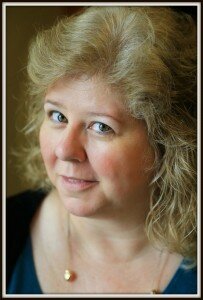 Hello, CWD friends, I’m thrilled to have my long-time friend, author Felicia Bridges, with us today. As I tried to remember how we first met, I decided it was at the Blue Ridge Mountains Christian Writers Conference years ago. We met and instantly connected as friends. And then, when I had the privilege of reading an early draft of this book, I knew I would one day ask her to be on my blog. And here we are!


 Yes, it’s the 3rd Tuesday and that means I have a gift of opportunities collected just for you, my friends at the Christian Writer’s Den. Let’s start with this month’s writing opps and contests!

 7. Christian Communicators Conference: August 24-28, 2016 The Billy Graham Training Center at The Cove, Asheville, NC. (We’re full, but the waiting list is now open. Details for waiting list here: Conference & Registration Details. Waiting list is free.)

